Next: 3. Hydro-mechanical coupled processes: Up: 2. Continuum mechanics Previous: 2.6 Navier's equation Contents
Consider a 2D problem of a circular cavity subjected to far field effective stresses
 = 12 MPa and
 = 3 MPa.
The diameter of the cavity is 0.2 m.
Rock properties:
= 3 MPa.
The diameter of the cavity is 0.2 m.
Rock properties:  = 10 GPa,
  = 0.20, unconfined compression strength
  = 30 MPa, tensile strength
  = 2 MPa.
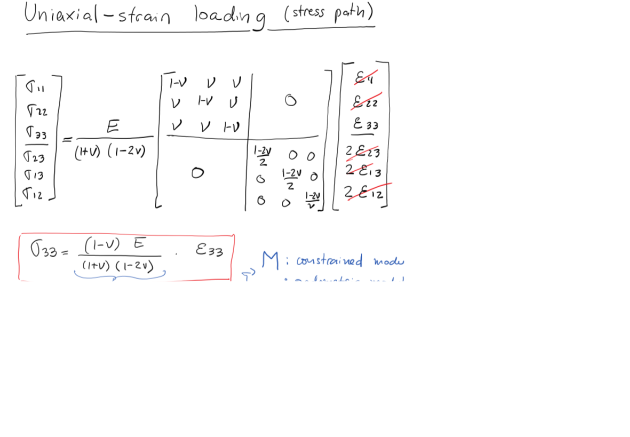 ,
,
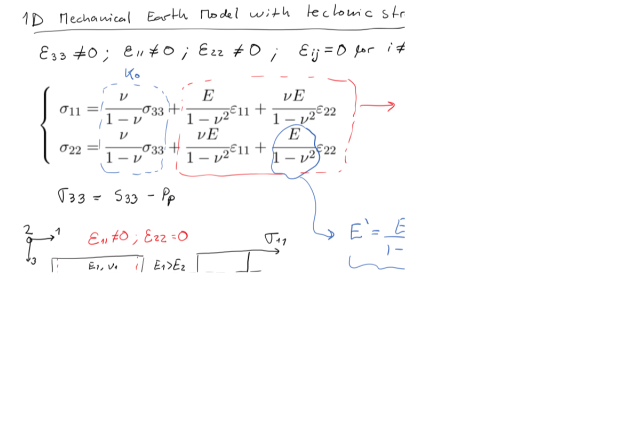 and
and
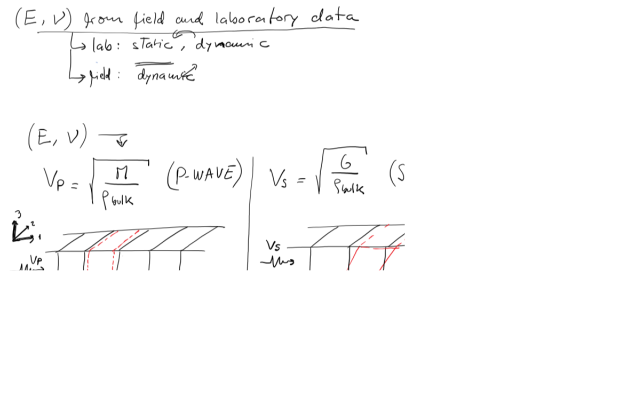 for a domain
 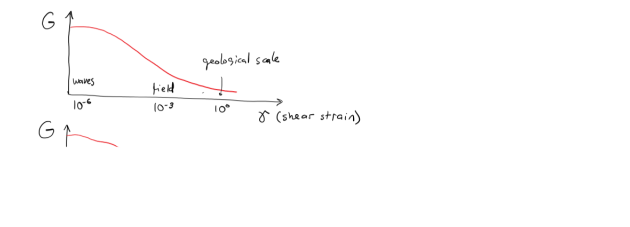 = [-1m, +1m], and
 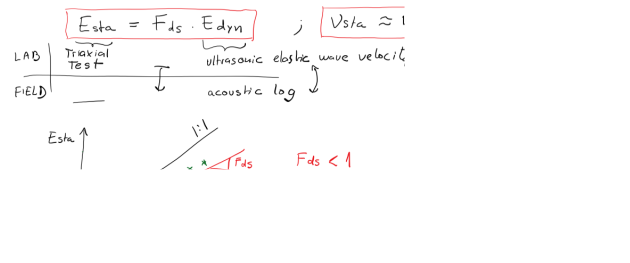 = [-1m, +1m]. You may define a polar grid for
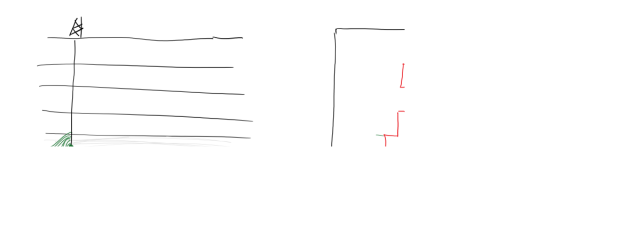 . How far does the presence of the wellbore influence stresses?
= [0.1m, 1m], = 0 m) and ( = 0 m, = [0.1 m, 1 m]). Equations in Ch. 6.2 (https://dnicolasespinoza.github.io/)
and
for
. How far does the presence of the wellbore influence stresses?
= [0.1m, 1m], = 0 m) and ( = 0 m, = [0.1 m, 1 m]). Equations in Ch. 6.2 (https://dnicolasespinoza.github.io/)
and
for 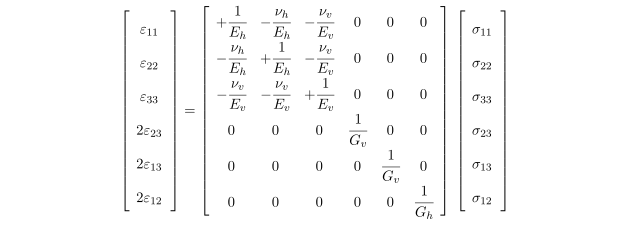 = 0.1 m. Is there any section of the rock in shear or tensile failure? Where?
,
and
= 0.1 m. Is there any section of the rock in shear or tensile failure? Where?
,
and
 ) assuming a domain size 2 m by 2 m. Compute
and
for the same lines as in point (b), and compare with Kirsch's analytical solution. Repeat the process for a domain size 0.5 m by 0.5 m. Are there any differences? Why?
and
.
) assuming a domain size 2 m by 2 m. Compute
and
for the same lines as in point (b), and compare with Kirsch's analytical solution. Repeat the process for a domain size 0.5 m by 0.5 m. Are there any differences? Why?
and
.
Hint: An example code for 2D elasticity in FreeFEM++ and the corresponding explanation are available at https://github.com/dnicolasespinoza/GeomechanicsJupyter/: Kirsch_Shovkun.edp and FreeFEM_Tutorial_Shovkun.pdf. You can also try FreeFEM++ online here: https://freefem.org/tryit.
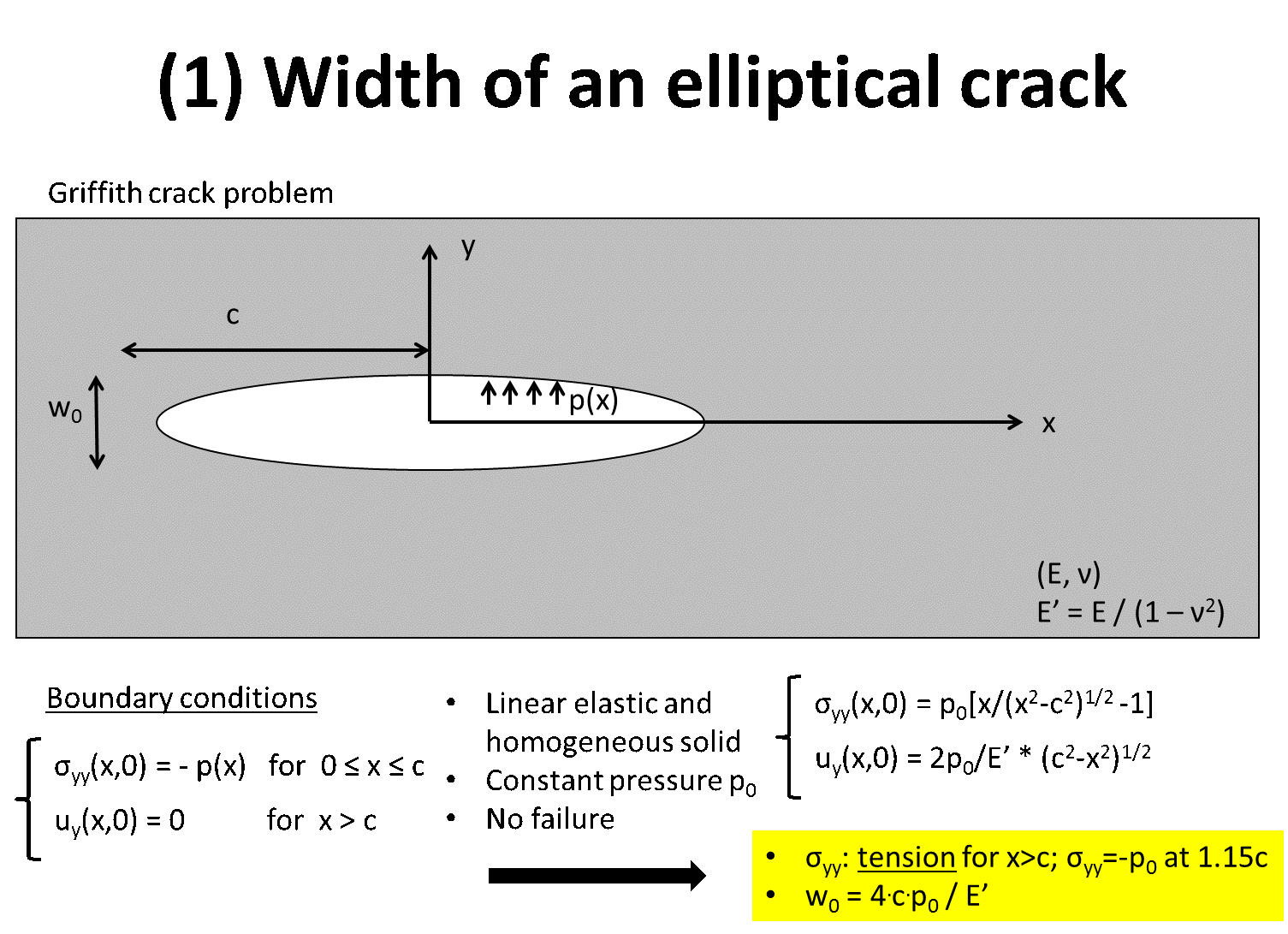
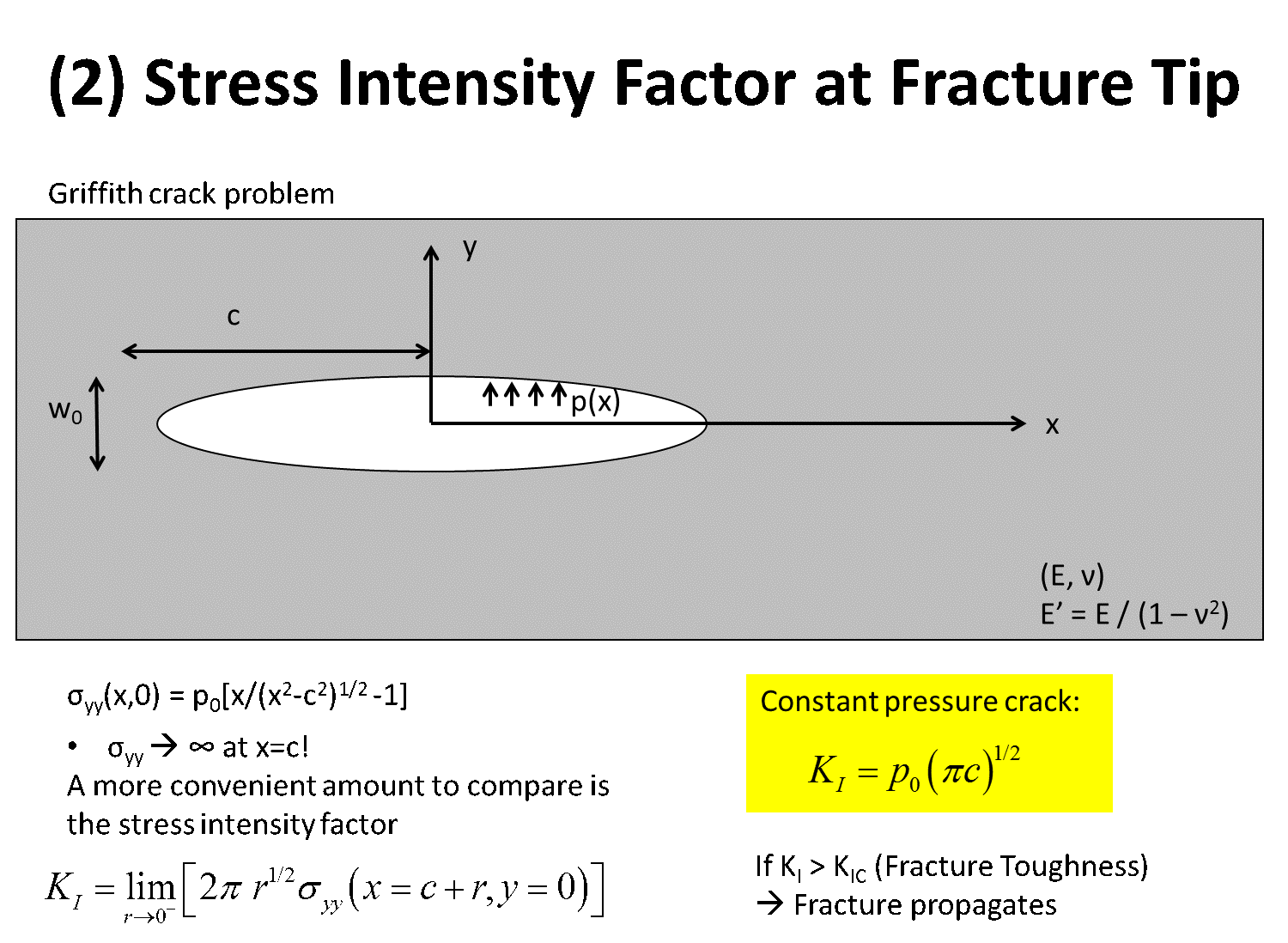
Consider a 2D problem of an elliptical fracture (half-length  = 10 m).
Solve the problem using just half of the domain.
Set the fracture along the left boundary of a domain: = [0 m, 100 m] and = [-50 m, 50 m], with fracture center at
= 10 m).
Solve the problem using just half of the domain.
Set the fracture along the left boundary of a domain: = [0 m, 100 m] and = [-50 m, 50 m], with fracture center at  (0,0) m.
This boundary will have a pressure boundary condition.
All other boundaries will have zero displacement.
Rock properties: = 30 GPa, = 0.20.
(0,0) m.
This boundary will have a pressure boundary condition.
All other boundaries will have zero displacement.
Rock properties: = 30 GPa, = 0.20.
,
and
imposing a fracture pressure  = 10 MPa. Plot results.
at the middle of the fracture (L1 = ( = [0, 100 m], = 0 m), Figure 2.2). How far does the influence of the fracture extend?
-displacements at the face of the fracture. Compare with analytical equation. Equations in Ch. 7.3.2 (https://dnicolasespinoza.github.io/).
along fracture length and beyond fracture tips (line L2 = ( = 0 m,
= 10 MPa. Plot results.
at the middle of the fracture (L1 = ( = [0, 100 m], = 0 m), Figure 2.2). How far does the influence of the fracture extend?
-displacements at the face of the fracture. Compare with analytical equation. Equations in Ch. 7.3.2 (https://dnicolasespinoza.github.io/).
along fracture length and beyond fracture tips (line L2 = ( = 0 m,  [-50, 50]) m, Figure 2.2) and compare with analytical Griffith solution.
![\includegraphics[scale=0.50]{.././Figures/FracModel.PNG}](img63.svg)